Antidepressants Not Working? Treatment-Resistant Depression Options in Fort Myers
Antidepressants not working? Here is the short version.
-
What TRD means
Two or more antidepressants, each at a full dose for 6 to 8 weeks, have not controlled your depression.
-
Start here
Talk with your prescriber before changing anything. A careful medication review is often the first step.
-
Options at our clinic
TMS therapy, SPRAVATO® (esketamine), and ketamine IV infusions, each with a different schedule.
-
Your first visit
A consultation with our psychiatric team, not a commitment to any one treatment.
Questions about your options? Call (239) 935-5599
Schedule a ConsultationIf you have tried two or more antidepressants, each at a full dose for six to eight weeks, and still feel stuck, you may have treatment-resistant depression (TRD). It is a recognized and treatable condition. At our Fort Myers clinic, next steps include a medication review, TMS therapy, SPRAVATO®, and ketamine IV infusions.
How Do You Know If You Have Treatment-Resistant Depression?
Fair trial or full trial? Why the difference matters
Not a fair trial yet
The medication never had a real chance to work.
- The dose stayed low
- It was stopped after a few weeks because of side effects
- Doses were often missed
Points toward TRD
The medication got a full trial and still did not help.
- Taken at an adequate dose
- Given at least 6 to 8 weeks
- True for two or more different antidepressants
We also check for factors that can hold recovery back
- Thyroid disease
- Chronic pain
- Other prescriptions
- Supplements
- Alcohol or substance use
- Bipolar disorder
Any of these can make depression look resistant when something else is in the way.
Treatment-resistant depression usually means at least two different antidepressants, each taken at an adequate dose for an adequate length of time, have not controlled your depression. Cleveland Clinic explains that "adequate" generally means at least six to eight weeks on each medication before judging whether it works.
That definition separates two very different situations. One is a medication that never got a fair trial: the dose stayed low, it was stopped after a few weeks because of side effects, or doses were often missed. The other is a medication that got a full trial and still did not help. Only the second points toward TRD.
Before we call depression treatment-resistant, we also look at what else may be holding recovery back. Thyroid disease, chronic pain, other prescriptions, supplements, alcohol or substance use, and a diagnosis such as bipolar disorder can all make depression look resistant when something else is in the way. Sorting that out first means your next treatment is aimed at the right problem.
If you are not sure where you stand, write down every antidepressant you have tried, the highest dose, how long you took it, and why you stopped. That single page often answers the question at your first visit.
What Should You Do First When Your Antidepressant Isn't Working?
Talk with your prescriber before changing anything. Stopping or adjusting a medication on your own makes it harder to tell what is helping, and Mayo Clinic advises against changing doses without your doctor's guidance.
A careful medication review is often the first step, and sometimes it is enough. Options at this stage include giving the current medication more time, adjusting the dose, switching to a different antidepressant, or adding a second medication. Through our psychiatric medication management service, we review your full medication history, side effects, and goals with you, then make changes in a measured way so you can see what is working.
When two or more full medication trials have not helped, another pill is not your only path forward. That is the point where treatments that work differently from standard antidepressants become worth a real conversation. Most antidepressants work by raising levels of serotonin, norepinephrine, or dopamine. The options below take a different route, either by stimulating mood-related areas of the brain directly or by acting on glutamate, the brain's most abundant chemical messenger.
Which Treatment-Resistant Depression Options Can You Choose From?
The main options beyond standard antidepressants are TMS therapy, SPRAVATO® (esketamine) nasal spray, ketamine IV infusions, and electroconvulsive therapy (ECT). We offer the first three at our clinic. Each one asks something different of your schedule and your day, and that is often what decides the right fit.
| Treatment | How it is given | Typical schedule | Time per visit | After your visit | At our clinic |
|---|---|---|---|---|---|
| TMS therapy | Magnetic pulses from a coil placed near the scalp; no anesthesia | Daily sessions, 5 days a week for 4 to 6 weeks | About 19 to 40 minutes | No downtime; return to your day | Yes |
| SPRAVATO® | Nasal spray you take yourself under direct medical supervision | Twice a week for the first 4 weeks, then most patients go weekly | Dosing plus at least 2 hours of observation | Someone drives you home; no driving until the next day after restful sleep | Yes |
| Ketamine IV | A measured dose through an IV line | Set by your provider; 3 infusions are typically recommended to see whether it helps | About 45-minute infusion; 90 to 120 minutes at the clinic | Someone drives you home; no heavy machinery for at least 12 hours | Yes |
| ECT | Brief electrical stimulation under general anesthesia | Usually 3 times a week, often 6 to 12 treatments | Includes anesthesia and recovery time | Recovery from anesthesia | No |
Schedule and time-per-visit details for TMS and ECT come from the
National Institute of Mental Health; SPRAVATO® monitoring and driving rules come from its FDA prescribing information.
Is TMS a Good Fit If You Want to Avoid More Medication?
TMS is often a strong fit if you are tired of medication side effects or changes, because it does not add a drug to your system. The National Institute of Mental Health notes that the FDA cleared the first rTMS device for depression in 2008, that treatment needs no anesthesia, and that it can be done in an office setting.
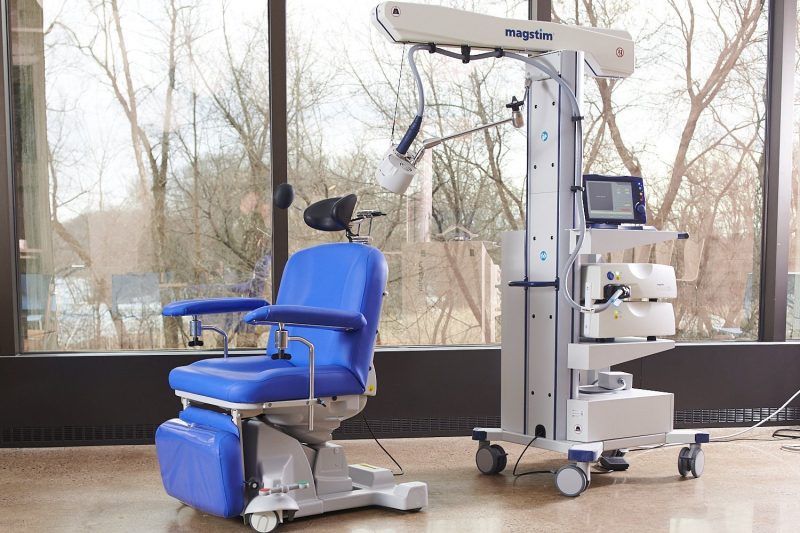
During a session, you sit in a treatment chair while a coil placed near your scalp delivers magnetic pulses to an area of the brain linked to mood. You stay awake the whole time, and when the session ends you can head back to work or home. The trade-off is time: a standard course runs five days a week for four to six weeks, so it suits people who can build a short daily visit into their routine. Sessions at our clinic run about 19 to 40 minutes.
Side effects tend to be mild and often ease over the course of treatment. They can include scalp discomfort, tingling or twitching of facial muscles during the session, mild headaches, and brief lightheadedness. Many insurance plans cover TMS, and our
TMS therapy in Fort Myers team will help you understand what your plan requires before you begin.
When Might SPRAVATO® or Ketamine IV Make More Sense?
SPRAVATO® and ketamine IV are often considered when depression is severe or when you want an option that works through a different brain pathway than standard antidepressants. Both act on the brain's glutamate system, and both are given in our office with our medical team monitoring you throughout.
SPRAVATO® is an FDA-approved nasal spray for adults with treatment-resistant depression. Because it can cause drowsiness, dissociation, and a rise in blood pressure, its FDA prescribing information requires it to be given under direct observation in an enrolled healthcare setting, with monitoring for at least two hours after each dose. You will need a ride home, and you should not drive until the next day after a restful sleep. At our SPRAVATO® clinic, care starts with a consultation to confirm eligibility.
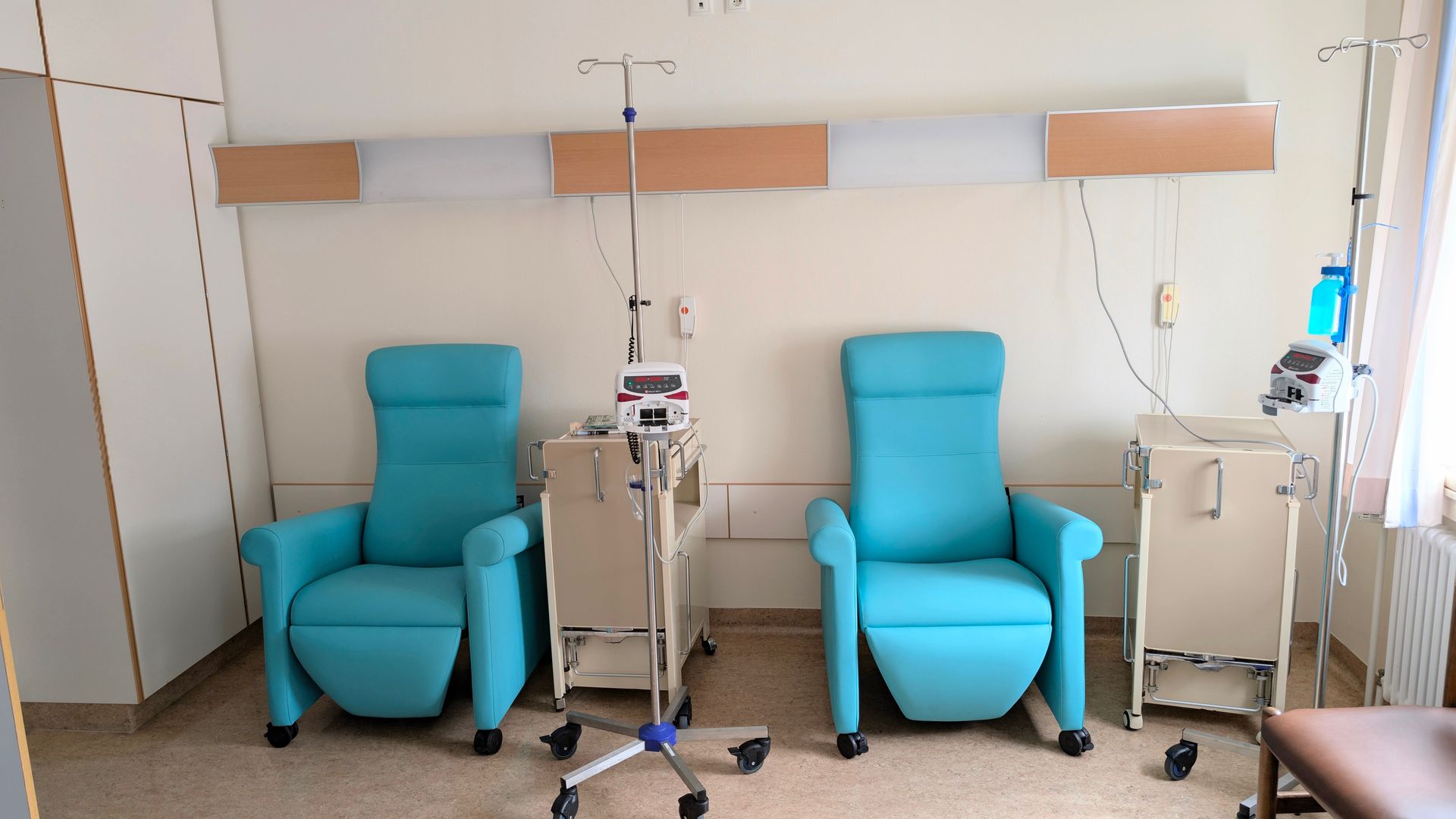
Ketamine IV is given as a carefully measured infusion through an IV line. You stay awake and can listen to music or rest. Some people feel dizzy, floaty, or detached during the infusion, and these effects typically fade soon after. Tricare covers ketamine IV therapy at our clinic, and we offer payment options for other patients.
If you are weighing these two, our guide to
ketamine infusion vs. SPRAVATO® in Fort Myers compares delivery, timing, monitoring, and candidacy side by side.
What Happens at Your First Visit With Us?
Your first visit is a consultation with our psychiatric team, not a commitment to any one treatment. We review your history and symptoms, then recommend the option that fits your situation and your schedule.
- Reach out. Call us at (239) 935-5599 or submit our online form. We are open Monday through Friday, 10:00 am to 5:00 pm.
- Complete your new patient registration forms. This gives us your health and medication background before you arrive.
- Take a screening if you like. Our confidential PHQ-9 depression screening takes a few minutes and gives us a useful starting point.
- Meet with our team. We go through each antidepressant you have tried, the doses, how long you took them, side effects, and any health conditions that may affect your mood.
- Receive a personalized treatment plan. Your plan may include medication changes, TMS, SPRAVATO®, ketamine IV, or a combination. We also walk through insurance and payment options, including CareCredit financing for TMS and ketamine treatment.
Talk With Our Team About Your Next Step
If two or more antidepressants have not given you the relief you need, you deserve a clear plan for what comes next. Call (239) 935-5599 or schedule a consultation with our psychiatric team.
Questions & Answers
Treatment-Resistant Depression FAQ
Should I keep taking my antidepressant while I explore other options?
Keep taking your medication as prescribed until you have talked with your prescriber. Some treatments are used alongside an antidepressant and others may not be, depending on your history and the plan we build together. Any change to your current medication should be a planned decision, not a sudden stop.
Does insurance cover treatment-resistant depression care?
It depends on the treatment and your plan. Many insurance plans cover TMS, and Tricare covers IV ketamine at our clinic. For patients who need help with costs, we accept CareCredit financing for TMS and ketamine treatment. We review your coverage and payment options with you before treatment begins.
Do you see patients from outside Fort Myers?
Yes. Our office on Winkler Road serves patients from across Lee County, including Cape Coral, Estero, Iona, Fort Myers Beach, and Sanibel. Because TMS involves daily weekday visits, we help you plan a schedule that works with your commute before you start.
What if I am having thoughts of suicide?
Please get help right away. Call or text 988 to reach the 988 Suicide & Crisis Lifeline, call 911, or go to your nearest emergency room. Our office is open weekdays during business hours, so urgent support should always come through those services first.
MENTAL HEALTH SERVICES
BOOK A CONSULTATION
Knowing that you are not alone is of utmost importance. Seek assistance for depression today!
OUR SERVICE SUPPORTS MENTAL WELLNESS
- Depression
- Lack of Joy
- Sadness and Despair
- Low Mood
- Lethargy
- Insomnia
- Oversleeping
- Social Isolation
- Self-Harm
- Substance Abuse
- Suicidal Ideation
- Alcoholism