Chronic Pain and Depression: How TMS Therapy and Ketamine Can Help

Dr. Zaheer Aslam • January 27, 2026
Quick Summary / TL;DR

Chronic pain and depression often reinforce each other — but there are newer, brain-targeted options.

Below is the “at a glance” version of what this article covers (why they’re linked + how TMS and ketamine may help).

Why they’re connected

  • Shared brain circuits that process emotion + pain
  • Overlapping neurotransmitters (serotonin, dopamine, glutamate, etc.)
  • Inflammation can increase risk and symptom severity

What TMS may do

  • Noninvasive magnetic pulses to influence targeted networks
  • May reduce “central sensitization” (overactive pain signaling)
  • Typically builds gradually across multiple sessions

What ketamine may do

  • Works on NMDA/glutamate pathways tied to mood + pain processing
  • Can support neuroplasticity (new “routes” in the brain)
  • Must be medically supervised due to misuse potential
Key idea: treating pain and mood together can be more effective than chasing each condition separately. (This block is informational and not medical advice.)

If you live with chronic pain, it’s not unusual to struggle with your mood, too. Chronic pain and depression often occur together, and their impact can extend well beyond physical discomfort or emotional strain.


In this blog, we’ll look at why the link between chronic pain and depression exists and how treatments like TMS and ketamine are offering patients new options when more traditional therapies fall short.

What Connects Chronic Pain and Depression in the Brain?

Chronic pain often reflects changes within the central nervous system, where pain becomes encoded in brain circuits rather than solely in injured joints or nerves. This is one reason why chronic pain can persist long after a physical injury has healed, and why it so often affects mood.


Research shows that several brain regions involved in processing emotion also play a role in pain. These include the prefrontal cortex, amygdala, anterior cingulate cortex (ACC), insula, hippocampus, and thalamus. All of these areas help regulate attention, emotion, memory, and the interpretation of sensory input. When pain becomes chronic, activity within these regions can shift.


Neurotransmitter systems also overlap. Studies demonstrate that serotonin, norepinephrine, dopamine, and glutamate (which influence mood, motivation, and emotional regulation) are the very same chemical messengers involved in how the brain interprets and amplifies pain signals. Meanwhile, changes in brain-derived neurotrophic factor (BDNF) and other neuroplasticity-related markers can alter how these networks communicate over time.


Inflammation adds yet another connection point. Studies show that pain in multiple body sites increases depression risk, partly explained by inflammatory blood markers like C-reactive protein.


Taken together, these overlapping neural, biochemical, and inflammatory pathways help explain why chronic pain and depression so frequently appear side by side.

The Real-World Impact of Chronic Pain and Depression

The overlap between pain and mood disorders is common, and it has real consequences for everyday life. A large worldwide analysis found that roughly 40% of people with chronic pain experience clinically significant depression or anxiety, with women, younger adults, and people with fibromyalgia facing the highest risk.

In the United States alone, an estimated 12 million adults live with both chronic pain and anxiety and/or depression symptoms at the same time.


People with both chronic pain and depression are more likely to miss work, struggle with errands, and reduce social participation, leading to a measurable drop in quality of life and daily functioning. That’s why experts consider this overlap a growing public health concern rather than just a clinical curiosity.

Why this overlap matters (in real life)

When pain and mood symptoms stack, daily functioning, sleep, relationships, and work are often hit hardest.

≈40%
of people with chronic pain experience clinically significant depression or anxiety (global analyses).
12M
U.S. adults live with chronic pain plus anxiety and/or depression symptoms at the same time.
Up to 60%
report limited benefit from standard medications—often due to side effects or incomplete relief.
Numbers reflect estimates commonly cited in the research literature; individual experiences vary.

Standard Treatments Don’t Always Break the Cycle of Chronic Pain and Depression

Chronic pain and depression are typically treated with a mix of medications and behavioral strategies. Depending on the person, that might include antidepressants, opioids, anticonvulsants, psychotherapy (especially CBT), and structured physical activity. These approaches can certainly help, but they don’t work for everyone.


Up to 60% of people with chronic pain report limited benefit from standard medications, and many also struggle with side effects like fatigue or cognitive changes. On top of that, individuals with both chronic pain and depression are often excluded from clinical trials and specialty pain programs, leaving major gaps in care. This mismatch between patient needs and available solutions has pushed researchers to explore brain-targeted therapies like TMS and ketamine.

How Transcranial Magnetic Stimulation Helps Chronic Pain and Depression

Supervision & Safety

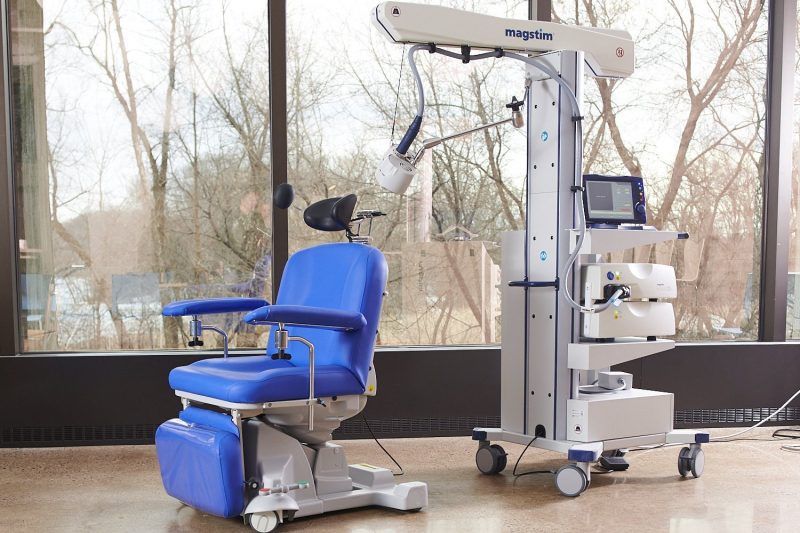
Transcranial magnetic stimulation (often referred to as TMS) is a noninvasive, drug-free procedure that uses magnetic pulses to stimulate specific regions of the brain. It’s FDA-approved for depression and obsessive–compulsive disorder, and researchers are now studying how it might also help people living with chronic pain.

By influencing electrical activity in neural circuits linked to pain and mood, TMS may help “reset” overactive pain networks and reduce central sensitization (the heightened sensitivity that makes everyday sensations feel painful).


Studies show benefits for conditions like fibromyalgia, neuropathic pain, complex regional pain syndrome (CRPS), and migraines. One case report even documented two patients with chronic low back pain, depression, and insomnia who experienced reduced pain, improved sleep, and better mood after three to four weeks of daily repetitive TMS. These effects lasted roughly three months with minimal side effects.


Practically speaking, TMS isn’t a one-and-done treatment. It typically involves multiple sessions over several weeks. It tends to be well-tolerated, and often provides incremental, cumulative relief rather than instant results.

Ketamine’s Dual Role in Treating Chronic Pain and Depression

In recent years, ketamine has emerged as an FDA-approved option for treatment-resistant depression. But it works differently from standard antidepressants.


Ketamine blocks NMDA receptors and influences glutamate signaling, a key player in neuroplasticity, pain processing, and mood regulation. By shifting these pathways, ketamine may help recalibrate how the brain interprets both emotional distress and physical pain.


The clinical evidence is compelling. In a prospective cohort of 329 adults with refractory chronic pain, repeated ketamine treatments over one year reduced pain, depression, and anxiety while also improving quality of life. The study concluded that ketamine may reduce pain partly by treating the mood disorder that travels alongside it.

Ketamine does, however, carry potential for misuse, which is why it should only be used within a comprehensive treatment plan, at the lowest effective dose, and under the supervision of trained professionals.

For select patients, ketamine is a promising depression treatment that can also address chronic pain, rather than trying to chip away at each condition in isolation.

Is TMS or Ketamine Right for You?

Choosing between TMS and ketamine is a conversation to have with a qualified specialist who understands both chronic pain and mood disorders. TMS may appeal to people looking for a noninvasive, drug-free approach, while ketamine is often considered when depression is severe, treatment-resistant, and intertwined with chronic pain.


In practice, a combination of interventions may be best for you. Many patients benefit from a broader plan that may include physical therapy, CBT or other psychotherapy, lifestyle changes, and support for sleep and stress management.

How to Move Forward When You’re Dealing with Chronic Pain and Depression

Living with chronic pain and depression can feel like a double burden, but you’re not alone. You’re also not without options. These conditions often show up together, and while that makes the journey more complex, it also means there are treatments designed to address both. Many people with chronic pain still lead meaningful, connected, and fulfilling lives.


TMS & Ketamine Clinic of SW Florida is a leading provider of both TMS therapy and IV ketamine infusions. We serve residents in Fort Myers and the surrounding areas throughout Southwest Florida.


If you’re looking for a team that can support you in finding relief from chronic pain and depression, we are here to help. Contact us today.

Frequently Asked Questions

FAQ: Chronic pain, depression, TMS, and ketamine

Quick answers to common questions patients ask when pain and mood symptoms overlap.

Can TMS help with chronic pain, or only depression?
TMS is FDA-cleared for depression (and OCD). Research also explores how stimulating specific brain networks may reduce certain chronic pain syndromes—especially when pain is linked to central sensitization and mood changes.
How many TMS sessions are typical?
Most protocols involve multiple sessions over several weeks. Many people notice changes gradually as the effects build across sessions (rather than instantly after one visit).
How does ketamine support both mood and pain?
Ketamine influences NMDA/glutamate signaling, which is involved in neuroplasticity, mood regulation, and pain processing. For some patients, improving depression can also reduce pain intensity and improve function.
Is ketamine safe? What about misuse risk?
Ketamine should be administered and monitored by trained clinicians, using the lowest effective dose inside a comprehensive treatment plan. Screening, supervision, and follow-up help reduce risk.
Can TMS and ketamine be used together?
Sometimes—depending on symptoms and medical history. Many people also benefit from combining brain-targeted treatments with therapy (CBT), sleep support, stress management, and physical rehab.

BOOK A CONSULTATION

Knowing that you are not alone is of utmost importance. Seek assistance for depression today!

CONTACT US

OUR SERVICE SUPPORTS MENTAL WELLNESS

  • Depression
  • Lack of Joy
  • Sadness and Despair
  • Low Mood
  • Lethargy
  • Insomnia
  • Oversleeping
  • Social Isolation
  • Self-Harm
  • Substance Abuse
  • Suicidal Ideation
  • Alcoholism
A person on a sofa is being interviewed by someone holding a clipboard in a room.
By Dr. Zaheer Aslam December 31, 2025
If you're considering ketamine therapy and unsure whether to pursue treatment at home or at a local clinic, this article will help you make an informed choice.
By Kimberly Mercille September 4, 2025
At TMS Clinic of Southwest Florida, we know that no two patients are the same. That’s why we use different transcranial magnetic stimulation (TMS) protocols depending on each person’s condition and needs. In this article, we’ll explain how TMS works, the different protocols available, and how they are applied to specific psychiatric disorders.
By Matt Rodriguez September 2, 2025
When considering Transcranial Magnetic Stimulation (TMS) as a treatment option, it's crucial to look not only at the clinic and provider but also at the specific device being used. The type of TMS machine can significantly impact the effectiveness of the treatment, including your comfort and speed of recovery. In this article, we compare several of the most widely used TMS devices on the market to help you make a well-informed decision.
Person standing near shoreline
By Matt Rodriguez July 8, 2025
Living with depression can be incredibly difficult, especially when traditional medications don’t bring relief. In this article, we’ll be discussing the nasal spray, Spravato, which is a breakthrough FDA-approved treatment for depression. We’ll discuss the science and safety of Spravato and what to expect during the treatment process. What Is Spravato? Spravato is a nasal spray containing esketamine , a chemical compound derived from ketamine. Ketamine is a widely recognised, effective, rapid-acting treatment for depression and other mental health disorders that was initially developed as an anesthetic. Esketamine is an enantiomer of ketamine, meaning it is one of two mirror-image molecules that make up ketamine when in its original form (“generic ketamine”). This enantiomer interacts more strongly with NMDA receptors , which are proteins thought to underlie the ketamine’s antidepressant effects. Spravato was developed to treat depression by Janssen Pharmaceuticals , a division of Johnson & Johnson. After rigorous research and clinical testing, Spravato received FDA approval in March 2019 for adults with treatment-resistant depression. In August 2020, it also received approval for adults experiencing depression with acute suicidal ideation or behavior . Unlike ketamine, which is often used “off-label” for various mental health conditions, Spravato is an FDA-approved and regulated treatment. It is administered only in c ertified healthcare settings under a strict protocol to ensure patient safety. How Spravato Works: A Break from Traditional Antidepressants Conventional antidepressants like SSRIs and SNRIs mainly work by changing the levels of certain brain chemicals called monoamines , such as serotonin and norepinephrine. Spravato , however, works differently. It targets a different brain chemical called glutamate , which is essential for overall communication in the brain and functions like learning and memory. Spravato blocks NMDA receptors in the prefrontal cortex , a part of the brain involved in regulating mood and emotions. This boosts glutamate activity in that area, which is thought to be part of the reason why Spravato can relieve depression symptoms so quickly. Spravato also increases neuroplasticity , the brain’s ability to reorganize itself. This helps with depression in three main ways: Synaptic plasticity refers to the brain's ability to reorganize the connections between nerve cells, called synapses. Strengthening these connections may help strengthen circuits involved in stress and emotional regulation. Neurogenesis is the process of creating new nerve cells. This can help repair brain areas affected by depression. Functional connectivity describes how different regions of the brain work together. Improved connectivity may help people escape negative thought patterns and develop healthier, more flexible ways of thinking. Who Is Eligible for Spravato Treatment? Spravato is approved for use in adults diagnosed with TRD. To be considered for TRD, a person must have a formal diagnosis of MDD and must have tried at least two different antidepressants , at the right doses and for a minimum of six months, without significant improvement in symptoms. In addition to TRD, Spravato is also approved for patients experiencing depression with acute suicidal ideation or behavior . The patient will have active suicidal thoughts and intend to harm themselves. To be eligible for Spravato, patients must: Be diagnosed with MDD with TRD or MDSI Be currently taking a standard oral antidepressant (Spravato is used in combination with another medication) Be evaluated and monitored in a certified Spravato treatment center Be free from contraindications such as vascular disease or hemorrhage What to Expect During a Spravato Session Spravato is not a take-home medication. Each treatment must be administered in person at an approved clinic under close medical supervision. At our TMS and Ketamine Clinic of Southwest Florida, we’re a licensed provider of Spravato, serving Fort Myers and the surrounding areas. Here’s what you can expect if you undergo Spravato treatment at our centre: Arrival and Preparation You’ll check in and be escorted to a comfortable, private treatment room. A clinician will review your health status and answer any questions. Administration You’ll use the nasal spray yourself, but under direct observation. The device is pre-measured and easy to use. Monitoring Period After administration, you’ll be monitored for at least two hours . During this time, side effects are observed and managed, and you'll be made as comfortable as possible. Post-Treatment Once cleared by medical staff, you’ll be released to a pre-arranged caregiver or driver. You must not drive or operate heavy machinery for the rest of the day. The initial treatment schedule typically includes two sessions per week for four weeks , followed by a tapering period where the frequency is reduced based on your response. How Is Spravato Different from Ketamine? Although Spravato and ketamine are chemically related and affect the brain in similar ways, there are key differences in how they’re used in clinical practice: Spravato is FDA-approved specifically for depression , while ketamine is used “off-label” for a variety of conditions, including PTSD, anxiety, and chronic pain. Spravato is administered only via nasal spray in a certified clinic, while ketamine can be delivered through IV infusion, intramuscular injection, or oral lozenge . Spravato has a standardized dosage and protocol , ensuring consistency across treatments. Ketamine doses and regimens may vary more widely depending on the provider and purpose. Some patients find ketamine’s dissociative effects more pronounced, which can lead to therapeutic insights but may also be more intense or uncomfortable for others. Both treatments can be effective. If you’re uncertain about which one best suits you, our care team at TMS and Ketamine Clinic of Southwest Florida can help determine the most appropriate option based on your symptoms, history, and goals. What Are the Side Effects of Spravato? While Spravato is generally well-tolerated, it can cause side effects, most of which occur shortly after administration and resolve within a few hours. Common side effects include: Nausea or vomiting Dizziness or lightheadedness Dissociation (feeling disconnected from oneself or surroundings) Headache Increased blood pressure Fatigue or drowsiness Because of these effects, Spravato is administered only under supervision , with patients observed until they are stable and alert. Spravato Clinical Evidence: Effectiveness of Spravato in Depression In a 2018 study , participants with moderate to severe depression symptoms were treated with Spravato. At the final follow-up, 65% of participants had a 50% or greater decrease in scores of depression symptoms . Over 30% also achieved remission , meaning their symptoms had either gone or were very mild. In a more recent study , the effects of Spravato were assessed in 68 patients with MDD at imminent risk of suicide. Spravato led to a significant decrease in suicidal ideation and depression scores compared to the placebo, with noticeable improvement as early as four hours after treatment . Take the First Step Toward Relief At the TMS and Ketamine Clinic of Southwest Florida, we specialize in cutting-edge treatments for depression, including Spravato. Our experienced psychiatrist and dedicated mental health professionals are here to provide compassionate care and support every step of the way. If traditional treatments haven’t helped, you don’t have to keep struggling. Contact us today to find out if our innovative therapies could be the right solution for you.
By Kimberly Mercille May 27, 2025
In recent years, innovative treatments like ketamine and Spravato (esketamine) have emerged as groundbreaking options for individuals struggling with severe depression. Both treatments offer rapid relief, particularly for those who have not found success with traditional therapies. While ketamine and Spravato share similarities, they also have important differences in how they are used, how they work, their safety profiles, and their costs. At SW Florida TMS & Ketamine Clinic , we specialize in providing personalized, effective care to individuals seeking relief from mental health challenges. Understanding the differences between ketamine and Spravato can help you make an informed decision about which treatment is best suited to your needs.
Peaceful swirling blue artwork
By Matt Rodriguez May 7, 2025
At Southwest Florida TMS and Ketamine Clinic, we understand how difficult it can be to manage severe mental health conditions when traditional treatments aren’t effective. That’s why we specialize in two innovative therapies: Transcranial Magnetic Stimulation (TMS ) and ketamine therapy . In this article, we’ll explore the key similarities and differences between these treatments to help you determine which option may be right for you.
See More Posts